Tel: +85368902598
E-mail: tina@fyendoscopy.com

Tel: +85368902598
E-mail: tina@fyendoscopy.com
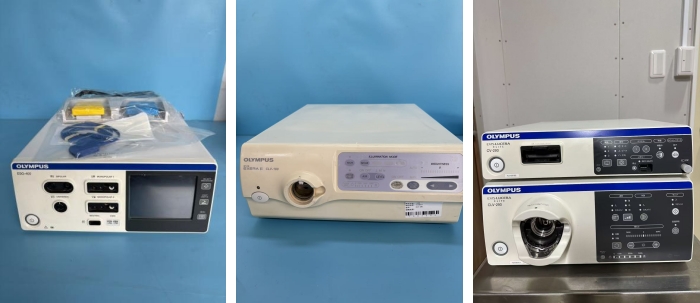
Olympus light sources—including those in the EVIS and VISERA endoscopy systems—are among the most widely used illumination units in flexible endoscopy worldwide. As a core component of endoscopy processors, these light sources power real-time visualization for gastroenterology, bronchoscopy, and minimally invasive procedures. However, like other medical devices from top flexible endoscope manufacturers, they can experience performance failures over time. Below are the most frequent issues, root causes, and practical troubleshooting steps for clinical and biomedical teams.
Many units experience no lamp ignition, intermittent lighting, or total power loss. This is the most reported issue in older EVIS and VISERA platforms, often caused by bulb wear, incompatible lamps, or internal power board degradation.
E102: Lamp ignition error – the system cannot detect or start the main bulb.
E931: White balance incomplete – prevents proper scope calibration and imaging.These codes often appear alongside flickering or unstable illumination.
Lamp flickering, inconsistent brightness, or unexpected switch to emergency light typically signal bulb end-of-life, poor contact, or voltage irregularities.
Loud clicking / grinding noise (faulty cooling fan)
Front panel lights blinking continuously
Power board or control board failure
Overheating due to blocked ventilation or aging components
Failure to complete white balance
Inability to reset the lamp hour counter
Mismatched communication between light source and endoscope
1. Lamp failure or non-Olympus approved bulbs (incompatibility is a top trigger)
2. Internal component aging (common in VISERA and early EVIS units)
3. Loose power, scope, or connector cables
4. Dirty or corroded electrical contacts
5. Blown internal fuses
6. Fan failure leading to overheating
7. Software or counter logic errors
1. Use only Olympus-certified bulbs to avoid ignition and compatibility errors.
2. Check and secure all power cords, lamp housing, and endoscope connections.
3. Inspect internal fuses for damage; replace if blown.
4. Clean connector pins to ensure stable signal transmission.
5. Resolve error codes immediately (E102, E931) to avoid permanent board damage.
6. Replace noisy or failing fans early to prevent overheating.
7. Perform regular preventive maintenance as recommended for high-use clinical settings.
Olympus light sources remain reliable for flexible endoscopy, but consistent issues often relate to lamp quality, component aging, and connection integrity. Prompt troubleshooting reduces downtime and supports safe, consistent visualization in endoscopy procedures.